

For over a decade, cloud gaming has promised to revolutionize how we play video games—no expensive hardware, no massive downloads, just instant access to high-end games streamed from the cloud. But for years, those promises were undermined by lag, poor graphics, and inconsistent service. Fast-forward to 2025, and the landscape looks vastly different. The technology has matured, networks have improved, and major players have doubled down on their cloud platforms.
But the question remains: is cloud gaming finally worth it in 2025?
Let’s break it down by examining the current state of the industry, evaluating the major platforms, identifying the pros and cons, and answering whether it’s the right time to jump in.
The Cloud Gaming Landscape in 2025
Table of Contents
Cloud gaming is no longer a niche. It’s now a serious contender in the gaming industry, competing with traditional consoles and gaming PCs. Major tech giants like Microsoft, NVIDIA, Amazon, and Sony have all refined their platforms. Even smaller players and startups are finding their niche in specialized cloud services.
Several key changes have propelled the shift in 2025:
-
Widespread 5G and Wi-Fi 6E: These faster, more reliable connections have dramatically reduced latency.
-
Edge Computing: Game data is processed closer to users geographically, lowering response times.
-
AI-based upscaling and lag compensation: New technologies help smooth gameplay even under less-than-ideal conditions.
-
Cross-platform integration: Games can be played on phones, tablets, TVs, and low-end laptops seamlessly.
Major Cloud Gaming Platforms Today
Let’s take a closer look at the main cloud gaming services in 2025:
1. Xbox Cloud Gaming (formerly xCloud)
Part of Xbox Game Pass Ultimate, this service offers hundreds of console and PC-quality titles streamed directly to nearly any device. With Microsoft’s Azure cloud infrastructure, performance is reliable and responsive.
Pros: Game Pass integration, day-one access to new Xbox titles, controller support
Cons: Some latency on mobile networks, still limited in certain regions
2. NVIDIA GeForce NOW
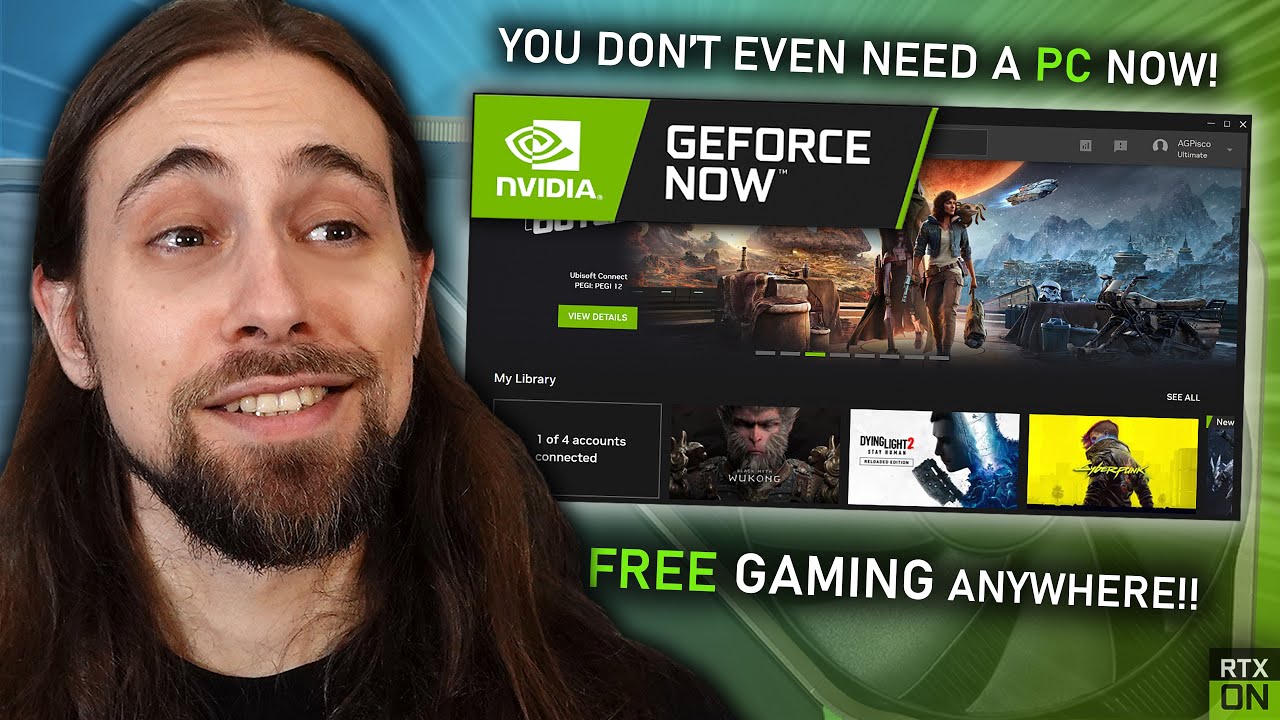
GeForce NOW has evolved into a powerhouse for PC gamers. Unlike Game Pass, it connects to your existing game libraries from Steam, Epic, and others. You can stream ultra-high settings thanks to RTX-powered virtual GPUs.
Pros: Supports high-end PC titles with ray tracing, BYO-library model
Cons: Limited free access, session limits on the free tier
3. Amazon Luna
Amazon’s Luna service has focused on simplicity and affordability. Its channel-based model offers bundles of games for different interests (like family, indie, retro, etc.).
Pros: Smooth interface, Fire TV integration, casual-friendly
Cons: Smaller selection of AAA games, fewer high-end features
4. Sony PlayStation Cloud Gaming
Integrated into the PlayStation Plus Premium tier, Sony has expanded cloud access to more games and devices, including smart TVs and PCs.
Pros: Access to PlayStation exclusives, cross-save support
Cons: Still catching up in terms of latency and resolution compared to others
The Pros of Cloud Gaming in 2025
1. Play Anywhere, Anytime
One of the biggest advantages remains flexibility. You can start a game on your PC and pick up where you left off on a phone or tablet. It breaks down the barriers between hardware ecosystems.
2. No More Expensive Hardware
In 2025, graphics cards are still expensive. Cloud gaming eliminates the need for constant hardware upgrades. All you need is a compatible device and a good internet connection.
3. Instant Access to Games
No more waiting for downloads, installations, or patches. Cloud platforms update games on their end, allowing you to jump straight into the action.
4. Eco-Friendly and Space-Saving
Running high-performance games on data centers can be more energy-efficient than powering millions of individual gaming rigs. Plus, there’s no clutter from physical consoles or discs.
5. Lower Barrier for Entry
Gamers in countries with limited access to high-end hardware can now enjoy top-tier titles with just a smartphone and controller.
The Cons of Cloud Gaming in 2025
1. Internet Dependency
Despite network improvements, cloud gaming still requires stable, high-speed internet. Rural and underdeveloped regions continue to face limitations.
2. Data Caps and ISP Throttling
Streaming games in 1080p or 4K consumes a lot of bandwidth. Many users still face data caps or throttled speeds from their ISPs, which impacts performance.
3. Input Lag and Latency
Although latency has improved, competitive gamers still prefer local installations for lightning-fast response times. FPS, rhythm, and fighting games can suffer from even a slight delay.
4. Limited Offline Functionality
Cloud gaming doesn’t work when you’re offline. If you lose connection or travel to areas with poor signal, your gaming stops entirely.
5. Licensing and Game Availability
Not every game is available on every service. If a developer pulls their title from a platform, you may lose access, even if you played it for months.
Comparing Cloud Gaming vs Local Gaming in 2025
| Feature | Cloud Gaming | Local Gaming |
|---|---|---|
| Initial Cost | Low | High (hardware investment) |
| Game Ownership | Subscription or rental | Permanent (if purchased) |
| Performance | Depends on internet quality | Consistent based on hardware |
| Portability | Very High | Limited to device |
| Modding Support | Minimal to None | Full modding support |
| Competitive Play | Some lag possible | Optimal for competitive gaming |
| Game Access Speed | Instant (no installs) | Requires download/install time |
Who Should Use Cloud Gaming in 2025?
Cloud gaming is now worth it for several groups of players:
-
Casual gamers who want to play occasionally without spending on hardware
-
Mobile-first players who prefer gaming on tablets and phones
-
Travelers and students who move often and can’t carry a full setup
-
Console players looking to expand their library via Game Pass or Luna
-
Gamers in regions with good internet but limited access to gaming PCs
However, cloud gaming may still not be ideal for:
-
eSports players or those heavily involved in fast-paced competitive games
-
Modders or those who want deep control over game files
-
People with unreliable or capped internet connections
Looking Ahead: The Future of Cloud Gaming
In 2025, cloud gaming is no longer a beta experiment. It has grown into a robust alternative to traditional gaming. As infrastructure continues to improve and cloud-native games become more common (designed specifically for streaming), the experience will get even better.
We may even see the rise of hybrid models where games run partially in the cloud and partially on your device for optimized performance. More cloud-exclusive titles, cross-save systems, and personalized AI-enhanced gameplay features are also on the horizon.

Conclusion: Is It Finally Worth It?
Yes—cloud gaming is finally worth it in 2025, depending on your gaming needs.
It has matured into a powerful and convenient way to enjoy games without investing in high-end equipment. While it may not fully replace local gaming for every user, it has earned its place as a legitimate platform. Whether you’re a student with a Chromebook, a busy parent with limited time, or just someone who wants to try AAA titles on a budget, cloud gaming is more accessible and enjoyable than ever before.
For many, it’s not just a backup option—it’s the primary way to play.