

As I sat down with my morning coffee, scrolling through my phone, I couldn’t help but notice my teenage cousin engrossed in Genshin Impact on his iPad, while my older brother was in the living room, controller in hand, battling it out in Elden Ring on his PlayStation 5. Meanwhile, my friend was texting me about her new PC build, raving about the mods she’d installed in Starfield. It hit me: gaming in 2025 is more diverse than ever, with mobile, console, and PC platforms each carving out their own slice of the industry. But which one is leading the charge? Let’s dive into the strengths, weaknesses, and trends shaping these platforms, drawing from my own experiences and the latest industry insights.
The Rise of Mobile Gaming: Accessibility Meets Innovation
Table of Contents
Mobile gaming has transformed from simple Snake and Candy Crush days to a powerhouse in 2025. I remember playing Among Us with friends during a long train ride, laughing over voice chat as we accused each other of being the imposter. That’s the magic of mobile gaming—its unparalleled accessibility. With smartphones now boasting powerful processors like the A18 Bionic and Snapdragon 8 Gen 4, mobile devices can handle graphically intensive titles like Honkai: Star Rail and Call of Duty: Warzone Mobile with ease.
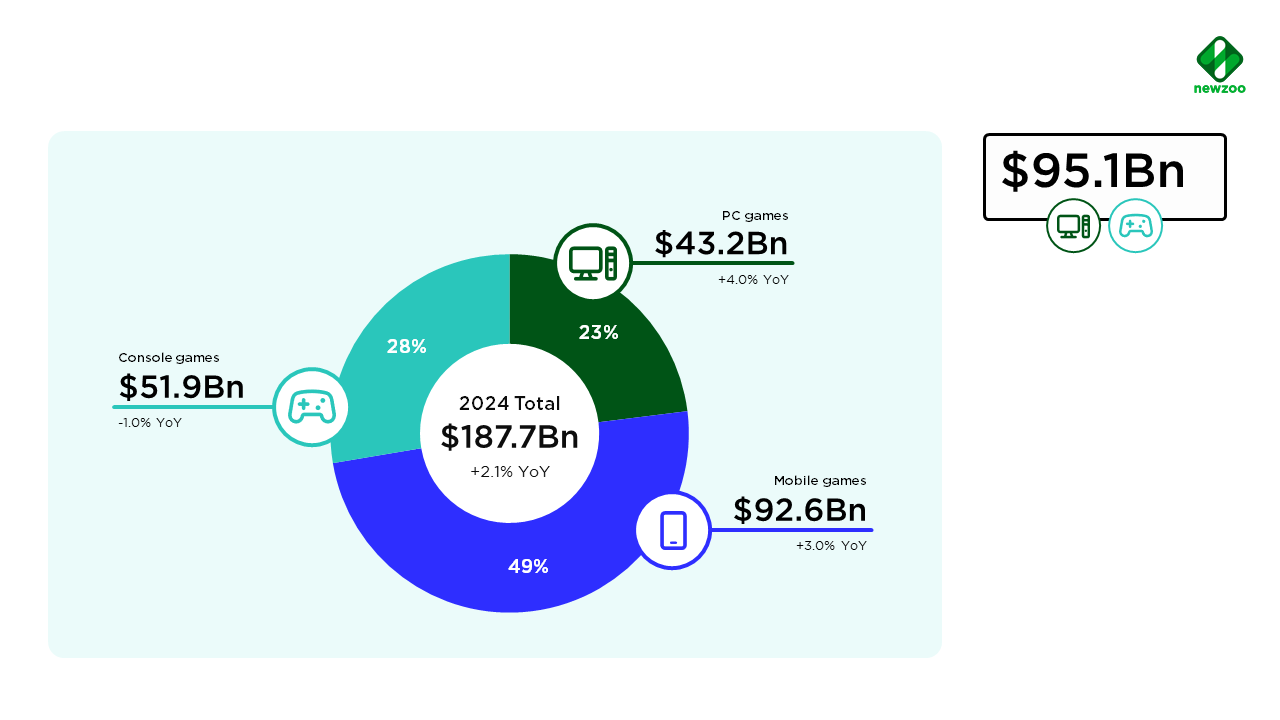
The numbers back this up. In 2025, mobile gaming accounts for over 50% of the global gaming market’s revenue, according to industry reports from Newzoo. Free-to-play models with in-app purchases and battle passes dominate, making games like Fortnite and PUBG Mobile cash cows. The rise of cloud gaming services, such as Xbox Cloud Gaming and GeForce Now, has further blurred the lines, letting mobile users stream AAA titles without needing a high-end device. My cousin, for instance, streams Cyberpunk 2077 on his mid-range Android phone, something unimaginable a decade ago.
Yet, mobile gaming isn’t without flaws. Touch controls can feel clunky for precision-heavy genres like first-person shooters, and battery drain is a constant gripe—I’ve lost count of how many times my phone died mid-match. Microtransactions also remain a sore point, with some games pushing pay-to-win mechanics that frustrate players. Still, the convenience of gaming anywhere, anytime, keeps mobile at the forefront for casual and younger audiences.
Console Gaming: The Living Room Champion
Console gaming feels like the cozy heart of the industry, and my evenings spent with friends on the couch, passing controllers for Super Smash Bros. Ultimate, are proof of its enduring appeal. In 2025, consoles like the PlayStation 5 Pro, Xbox Series X, and Nintendo Switch 2 deliver stunning visuals and seamless performance. The PS5 Pro’s enhanced ray tracing and 4K/120fps capabilities make games like God of War: Ragnarök look jaw-dropping, while the Switch 2’s hybrid design caters to both portable and docked playstyles.
Consoles excel in delivering curated, high-quality experiences. Exclusive titles like The Legend of Zelda: Echoes of Wisdom and Halo Infinite’s expansions keep players locked into specific ecosystems. The plug-and-play simplicity is a major draw—my brother doesn’t need to worry about driver updates or compatibility issues, unlike my PC-gaming friend. Consoles also dominate local multiplayer; nothing beats the chaos of a Mario Kart session at a family gathering.
However, consoles come with trade-offs. They’re expensive, with the PS5 Pro retailing at around $700, and game prices often hover at $70 or more. Online subscriptions like PlayStation Plus or Xbox Game Pass are practically mandatory for multiplayer, adding to the cost. Modding is also limited, and while consoles are catching up with features like Discord integration, they lack the flexibility of PCs. Still, for gamers who want a polished, hassle-free experience, consoles remain a strong contender.
PC Gaming: The Powerhouse of Customization
PC gaming is where I’ve personally sunk the most hours, tweaking settings in Skyrim to get that perfect balance of visuals and performance. In 2025, PCs are the undisputed kings of raw power and versatility. High-end rigs with Nvidia RTX 5090 GPUs and AMD Ryzen 9 processors push boundaries with 8K gaming, ultra-realistic ray tracing, and AI-enhanced graphics via DLSS 4.0. Games like Star Citizen showcase what’s possible when developers aren’t constrained by console hardware.
The PC’s biggest strength is its flexibility. Modding communities breathe new life into older titles—my friend’s Fallout 4 setup with 200+ mods feels like a brand-new game. Digital storefronts like Steam and Epic Games Store offer massive libraries and frequent sales, making PC gaming surprisingly affordable if you skip the bleeding-edge hardware. Cloud saves, cross-platform play, and tools like Steam Workshop make it a tinkerer’s paradise.
But PC gaming isn’t for everyone. Building or upgrading a rig can be daunting and expensive—my last GPU upgrade set me back $1,200. Compatibility issues, driver updates, and troubleshooting can turn a fun hobby into a headache. I once spent an entire evening fixing a crash in Baldur’s Gate 3 because of an outdated driver. For casual gamers, the learning curve and maintenance can feel overwhelming compared to the simplicity of consoles or mobile.
The 2025 Landscape: Who’s Leading?
So, which platform is leading in 2025? It depends on what you value most. Mobile gaming dominates in market share and accessibility, appealing to a broad audience with its low barrier to entry. Its growth is fueled by emerging markets, where smartphones are often the only gaming device people own. Consoles hold strong for dedicated gamers who prioritize high-quality, exclusive experiences and local multiplayer. PCs, meanwhile, lead in innovation and customization, attracting enthusiasts willing to invest time and money.
Cross-platform play is reshaping the conversation. Games like Apex Legends and Destiny 2 let players on mobile, console, and PC compete together, reducing the “us vs. them” mentality. Cloud gaming is another game-changer, bridging gaps by bringing console and PC titles to mobile devices. I recently tried Assassin’s Creed Mirage via Xbox Cloud Gaming on my tablet, and the experience was surprisingly smooth, though lag can still be an issue in fast-paced games.
Demographics also play a role. Younger players and casual gamers lean toward mobile, while consoles appeal to families and social gamers. PC gaming attracts older, tech-savvy audiences who value control and longevity. My cousin, brother, and friend each swear by their preferred platform, and I can’t say any of them are wrong—it’s about what fits your lifestyle.

Why We Game
Beyond specs and market shares, gaming is about connection and joy. Whether it’s my cousin bonding with friends over Roblox on his phone, my brother cheering as he beats a tough boss on his Xbox, or my friend sharing screenshots of her modded Cyberpunk 2077 cityscape, each platform brings something unique to the table. In 2025, the lines between mobile, console, and PC are blurring, but the passion for gaming unites us all.
Conclusion: A Three-Way Tie with a Bright Future
In 2025, no single platform can claim absolute dominance. Mobile leads in revenue and reach, consoles shine in curated experiences, and PCs push the boundaries of what’s possible. The real winner is the gamer, with more choices than ever. Whether you’re tapping away on a phone, gripping a controller, or fine-tuning your PC, the gaming industry’s evolution ensures there’s a place for everyone. As for me? I’ll keep switching between my phone for quick sessions, my console for couch co-op, and my PC for those late-night modding adventures. What’s your pick?