
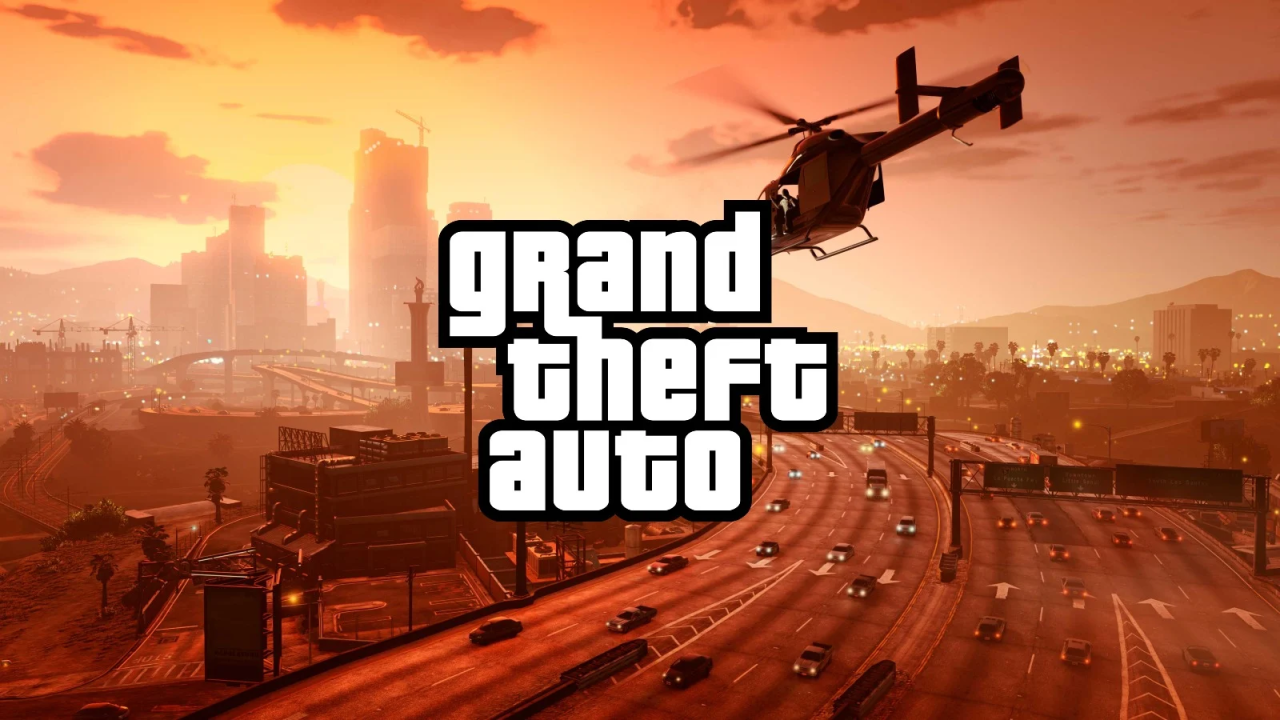

Grand Theft Auto (GTA), an iconic franchise developed by Rockstar Games, has profoundly influenced the landscape of open-world gaming since its inception. Over the decades, GTA’s visual presentation has undergone a remarkable transformation—from simple 2D, top-down graphics to sprawling, immersive 3D worlds that captivate millions worldwide. This evolution reflects not only advances in technology but also a shift in design philosophy, storytelling, and player engagement. In this essay, we will explore the journey of GTA’s visual evolution, examining key milestones, technological innovations, and the cultural impact of this transformation.
The Early Days: Top-Down 2D Graphics
Table of Contents
The story of GTA begins in 1997 with the release of the original Grand Theft Auto. At that time, the gaming industry was still relatively primitive in terms of graphics, especially for open-world games. The first GTA was developed using a top-down 2D perspective, reminiscent of classic arcade games and early computer RPGs. The visuals consisted of simple pixelated sprites representing vehicles, pedestrians, and buildings set against a minimalistic city map.
This design choice was primarily dictated by hardware limitations. The game was released on MS-DOS and PlayStation, platforms that constrained developers to relatively basic graphics. Despite its simplicity, the top-down view allowed players to navigate the cityscape with clarity, emphasizing gameplay mechanics such as crime, missions, and exploration rather than graphical fidelity. The focus was on delivering a provocative, sandbox experience that challenged social norms.
The top-down perspective also influenced the game’s aesthetic—colors were bright and exaggerated, and the city was depicted in a stylized manner. While primitive by today’s standards, it established the core concept of an open-world crime simulator.
Transition to 3D: The Birth of a New Era
The most significant shift in GTA’s visual evolution occurred with Grand Theft Auto III, released in 2001 for the PlayStation 2. This game marked a watershed moment as it transitioned from 2D top-down graphics to a fully 3D open-world environment, setting the template for future titles.
GTA III introduced players to Liberty City—a sprawling, fully realized 3D cityscape rendered with impressive depth and detail for its time. The camera was positioned behind the protagonist, Tommy Vercetti, offering a third-person perspective that enhanced immersion. This shift was revolutionary, enabling players to explore the city more naturally and experience a sense of realism and freedom previously unavailable in top-down games.
Technologically, GTA III leveraged the capabilities of the PlayStation 2’s hardware, including improved polygon rendering, textured environments, and more complex AI behaviors. The game’s graphics, while modest compared to today’s standards, were a leap forward, providing a believable urban environment filled with dynamic NPCs, traffic, and weather effects.
The move to 3D also impacted gameplay. It allowed for more nuanced mission design, stunt jumps, and exploration. The city felt alive, with pedestrians reacting to the player’s actions, police chases escalating realistically, and environments that could be interacted with in more meaningful ways.
Expanding Horizons: Vice City and San Andreas
Following GTA III, Rockstar continued to refine and expand their visual approach with Grand Theft Auto: Vice City (2002) and Grand Theft Auto: San Andreas (2004). Both games built upon the technological foundations of GTA III but pushed the visual envelope further.
Vice City was set in a stylized, neon-lit Miami-inspired environment. Its graphics showcased improved character models, better textures, and more vibrant lighting effects that captured the 1980s aesthetic. The city’s neon signs, palm trees, and sunset vistas created a distinct visual identity that became iconic in its own right.
San Andreas took the series into a larger, more diverse map spanning multiple cities and rural areas. Visually, it featured a more detailed and expansive world, with terrain variation, improved draw distances, and more sophisticated lighting. The character models and vehicles benefited from increased polygon counts, and the game introduced weather systems like fog, smog, and rain, adding atmosphere and realism.
These titles demonstrated that the series was capable of not only visual innovation but also creating immersive worlds that reflected different cultural and geographical settings. The visual evolution was driven by both hardware improvements—such as the PlayStation 2’s increased processing power—and advancements in game design, including better textures, lighting, and environmental effects.
The HD Era: GTA IV and GTA V
The next major leap in GTA’s visual evolution arrived with Grand Theft Auto IV (2008) and Grand Theft Auto V (2013). These titles marked the transition into the HD era, with a focus on realism, detail, and cinematic presentation.
GTA IV was built on the RAGE (Rockstar Advanced Game Engine) and the Euphoria physics engine, which allowed for more realistic character animations and vehicle dynamics. The game’s graphics featured highly detailed environments, realistic lighting, and weather effects that enhanced immersion. Liberty City was rendered with a gritty, authentic look, capturing urban decay and vibrancy simultaneously. The game’s character models were more lifelike, with nuanced facial animations that conveyed emotion—a significant step forward in visual storytelling.
GTA V took these advancements further, featuring an expansive, meticulously crafted world of Los Santos, based on Los Angeles. Its visuals were breathtaking, with high-resolution textures, dynamic lighting, realistic water effects, and detailed environmental elements such as foliage, reflections, and particle effects. The game also introduced three playable protagonists, each with unique animations and character models, emphasizing detail and personality.
GTA V’s technical prowess was evident in its seamless world—day-night cycles, weather systems, and highly detailed interiors. The game’s graphics set a new standard for open-world games, blending cinematic quality with interactive gameplay. The visuals were so compelling that they helped redefine what players expected from open-world experiences.
The Rise of Next-Gen and Continual Improvements
With the advent of PlayStation 4 and Xbox One, GTA V was re-released with further graphical enhancements, including higher-resolution textures, increased draw distances, and improved lighting. The PC version took these enhancements even further, offering ultra-wide support, modding options, and higher-quality assets.
Rockstar has continued to push the boundaries of visual fidelity through regular updates, especially in the context of GTA Online, where new vehicle models, weather effects, and environmental details have been added. The ongoing improvements reflect a commitment to maintaining the franchise’s cutting-edge visual standards.
Beyond Graphics: A Holistic Evolution
While technological advancements played a crucial role, the evolution of GTA’s visuals also involved a shift in artistic direction and design philosophy. Early titles relied on exaggerated, cartoonish visuals that emphasized satire and humor. As the series progressed into the HD era, realism and cinematic storytelling became more prominent, aligning with contemporary trends in gaming and media.
The development of detailed character models, complex physics, and dynamic environments allowed Rockstar to craft more immersive narratives, social commentary, and player agency. The visual evolution—from pixelated sprites to photorealistic worlds—mirrored the series’ growth from a rebellious, niche title to a mainstream cultural phenomenon.

Cultural Impact and Legacy
GTA’s visual evolution has not only been a technical achievement but also a reflection of broader cultural shifts. The series has pushed the boundaries of violence, satire, and social commentary, with its increasingly realistic visuals amplifying its messages. The detailed recreations of cities like Liberty City and Los Santos serve as digital mirrors of real-world urban life, offering players a space to explore, critique, and interact within complex social environments.
Moreover, GTA’s visual advancements have influenced countless other open-world titles, setting standards for environmental detail, character realism, and cinematic presentation. The series’ journey from simple top-down graphics to photorealistic worlds exemplifies how technological innovation can expand creative possibilities, deepen storytelling, and engage players on multiple levels.
Conclusion
The visual evolution of Grand Theft Auto—from its humble beginnings as a top-down pixelated game to its current state as a showcase of technological and artistic mastery—embodies the broader progression of video game development. Each milestone reflects not only advances in hardware and software but also a deepening commitment to immersive storytelling, social commentary, and player engagement.
GTA’s journey underscores the transformative power of technology in shaping how stories are told and experienced in the digital age. As hardware continues to evolve, it is likely that future GTA titles will push the boundaries of realism and interactivity even further, ensuring that the series remains at the forefront of gaming innovation.
In the end, the visual journey of GTA is a testament to the dynamic interplay between technology, creativity, and cultural expression—an enduring legacy that continues to influence the gaming industry and captivate audiences worldwide.