
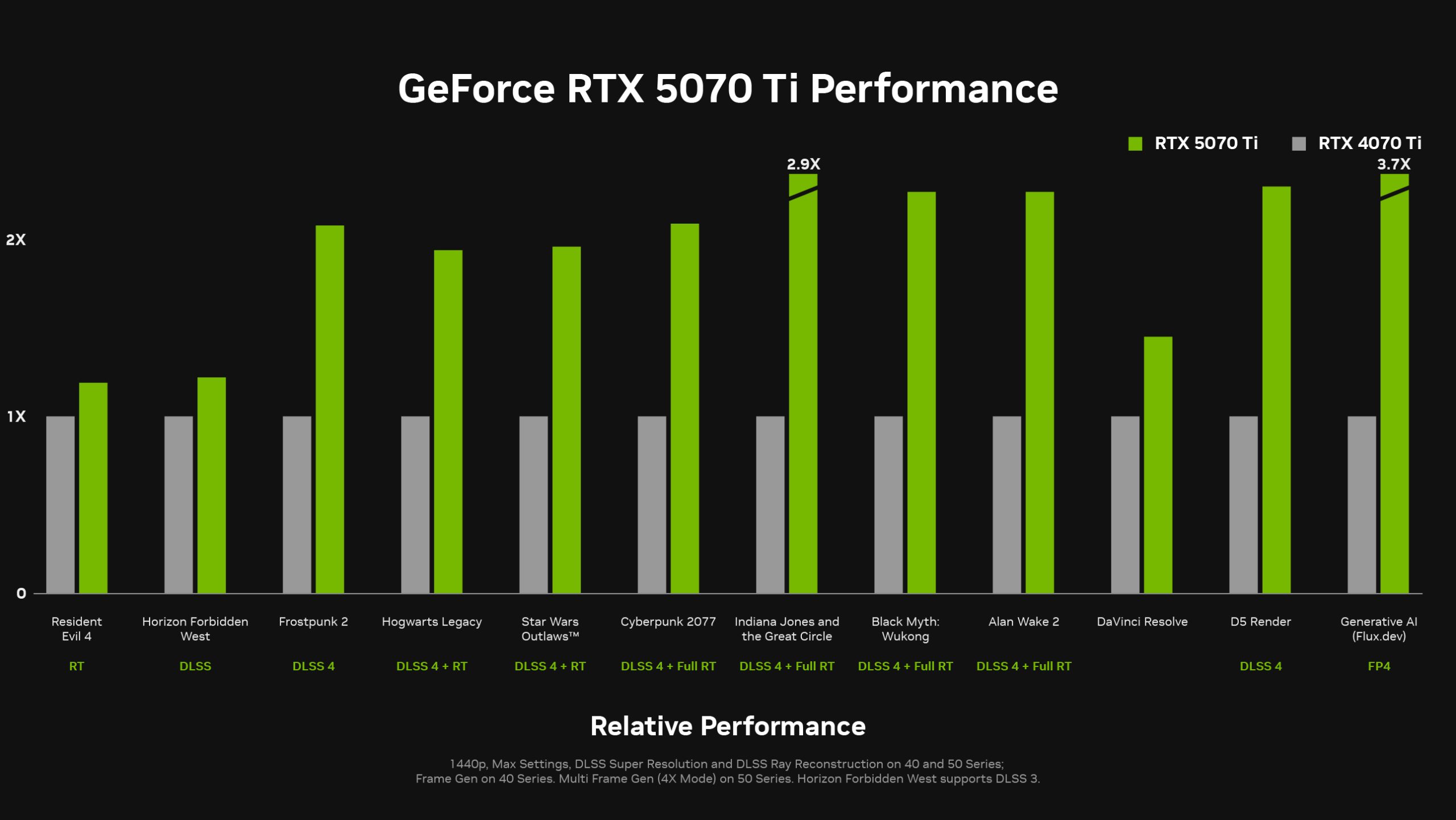

Graphics cards have become an integral component of modern computing, powering everything from high-end gaming to professional visualization, artificial intelligence, and scientific research. Over the past decade, the evolution of graphics processing units (GPUs) has been marked by significant technological advancements, performance leaps, and architectural innovations. Among the most notable developments in recent years is the transition from NVIDIA’s RTX 30 series to the RTX 50 series, encapsulating a new era of graphics computing. This comprehensive overview traces the journey of graphics cards from the RTX 30 series to the RTX 50 series, highlighting the technological strides, architectural improvements, and the implications for users and the industry.
The Context: The Rise of Real-Time Ray Tracing and AI Integration
Table of Contents
Before diving into the specifics of the RTX 30 and 50 series, it’s essential to understand the foundational shifts that set the stage for their development.
Real-Time Ray Tracing: Introduced as a game-changer in graphics realism, real-time ray tracing simulates the physical behavior of light, producing highly realistic reflections, shadows, and lighting effects. NVIDIA popularized this technology with the RTX series, marking a significant step beyond traditional rasterization.
AI and Deep Learning: The integration of artificial intelligence, particularly through NVIDIA’s DLSS (Deep Learning Super Sampling), has allowed for higher frame rates and improved image quality with lower hardware demands. This synergy of AI and graphics processing has become a defining feature of modern GPUs.
Manufacturing and Process Technology: The shift to smaller process nodes, such as Samsung’s 8nm and TSMC’s 7nm, has enabled more transistors, higher clock speeds, and better energy efficiency.
With this groundwork, the RTX 30 series (Ampere architecture) and RTX 50 series (Ada Lovelace architecture) represent the latest milestones in this evolution.
The NVIDIA RTX 30 Series: The Ampere Architecture
Launched in September 2020, the RTX 30 series was NVIDIA’s response to the increasing demands of gamers, creators, and professionals. Building upon the success of the previous Turing architecture, Ampere introduced several key innovations:
- Architectural Improvements:
- CUDA Cores: Significant increases in CUDA core counts across models, translating to improved parallel processing capabilities.
- RT Cores: Enhanced ray-tracing cores with better efficiency, enabling more realistic lighting in real-time.
- Tensor Cores: Upgraded for higher throughput, supporting DLSS 2.0 and beyond, allowing for AI-accelerated rendering and other workloads.
- Manufacturing Process:
- Utilized Samsung’s 8nm process node, allowing for higher transistor density and power efficiency.
- Performance and Features:
- Substantial performance gains over the previous generation, with the RTX 3090, 3080, and 3070 series offering impressive gaming and professional capabilities.
- Support for PCIe 4.0, enabling faster data transfer.
- Hardware-accelerated ray tracing and DLSS 2.0, which dramatically improved visual fidelity and performance.
- Market Impact:
- The RTX 30 series was well-received, setting new standards for gaming performance at various price points.
- It also pushed the industry towards more widespread adoption of ray tracing and AI-powered rendering.
Challenges: Despite its strengths, the RTX 30 series faced issues such as high demand and supply shortages due to global chip shortages and increased interest from cryptocurrency miners, leading to inflated prices and limited availability.
Transition to the RTX 40 Series (Ada Lovelace Architecture): The Next Leap
While the RTX 30 series established a new baseline, NVIDIA’s subsequent launch—the RTX 40 series—set out to push performance and efficiency even further. Announced and released starting in late 2022, the RTX 40 series is built on NVIDIA’s Ada Lovelace architecture, named after the 19th-century mathematician and writer Augusta Ada King, Countess of Lovelace.
Key Innovations and Features of the RTX 40 Series:
- Advanced Architecture:
- Enhanced CUDA Cores: The Ada Lovelace architecture features a significant increase in CUDA cores, enabling higher parallel processing and rendering capabilities.
- Next-Generation RT and Tensor Cores: These cores are redesigned for greater efficiency, supporting more sophisticated ray tracing and AI workloads.
- Shader Execution and RT Pipeline: Improved algorithms reduce latency and increase throughput, leading to more realistic graphics with less performance penalty.
- Manufacturing and Power Efficiency:
- The RTX 40 series is primarily built on TSMC’s 4nm process, allowing for even higher transistor density and better energy efficiency.
- NVIDIA has focused on optimizing power consumption, balancing performance with thermal design power (TDP).
- Performance Gains:
- The RTX 4090, the flagship of the series, boasts performance figures that surpass the RTX 3090 Ti by a significant margin.
- The series introduces DLSS 3, an upgraded version of NVIDIA’s AI-powered upscaling technology, which can generate entire frames using AI, thus dramatically increasing frame rates.
- New Features and Technologies:
- AV1 Encoding: Enhanced video encoding capabilities for streamers and content creators.
- Refined Ray Tracing: Real-time ray tracing is now more accessible in demanding AAA titles thanks to hardware improvements.
- Improved Connectivity: Support for HDMI 2.1 and DisplayPort 2.0, enabling higher resolutions and refresh rates.
- Market and Industry Impact:
- The RTX 40 series has been praised for its raw performance, especially in 4K gaming and professional workloads.
- The energy efficiency improvements have made high-end GPUs more accessible to users concerned about power consumption and cooling.
Challenges and Considerations:
- The high performance of the RTX 40 series comes at a premium price, which continues to be a concern for some consumers.
- Supply chain issues persisted, although NVIDIA has worked to mitigate shortages.
- The increased power requirements mean that users need compatible power supplies and adequate cooling solutions.
Comparing RTX 30 and RTX 50 Series: Technological Progress and Industry Trends
While the RTX 50 series (expected to launch or have launched by October 2023 based on the latest industry rumors and leaks) is still relatively new, the evolution from the RTX 30 series is marked by several key trends:
- Architectural Advancements:
- The RTX 50 series is anticipated to be based on the Lovelace architecture, continuing NVIDIA’s trend of incremental architectural improvements focused on performance, efficiency, and feature set.
- Process Node and Manufacturing:
- Transition to even more advanced manufacturing processes, potentially TSMC’s 3nm or equivalent, promising higher transistor counts, lower power consumption, and increased density.
- Performance and Efficiency:
- Significant performance uplift, particularly in rasterization, ray tracing, and AI workloads.
- Continued emphasis on power efficiency, enabling higher performance at similar or lower TDPs.
- AI and Machine Learning:
- Further enhancements to DLSS technology, possibly DLSS 4 or DLSS 5, offering even better upscaling quality and frame generation.
- Increased focus on AI-driven features such as real-time scene understanding, upscaling, and rendering.
- New Technologies and Features:
- Support for emerging standards like HDMI 2.1a, DisplayPort 2.1, and possibly new VR/AR interfaces.
- Improvements in hardware encoding, decoding, and streaming capabilities tailored for content creators and streamers.
- Market Position and Competition:
- AMD and Intel continue to challenge NVIDIA’s dominance, prompting ongoing innovation.
- NVIDIA’s focus on ecosystem integration, software, and developer tools remain central to its strategy.
Implications for Users and the Industry
The rapid evolution from RTX 30 to RTX 50 reflects broader trends in computing:
- Gaming: Higher resolutions, ray tracing, and AI-enhanced features make modern games more immersive. The performance leap means that 4K gaming with ray tracing is now more accessible.
- Content Creation: Video editing, 3D rendering, and AI workloads benefit from increased CUDA cores, more efficient ray tracing, and AI enhancements, reducing rendering times and improving workflows.
- Professional Use: Scientific simulations, AI training, and data analytics leverage the latest GPU architectures for faster computation and higher accuracy.
- Market Dynamics: Supply chain constraints, cryptocurrency mining demand, and geopolitical factors influence GPU availability and pricing. The new series aims to balance high performance with energy efficiency and scalability.
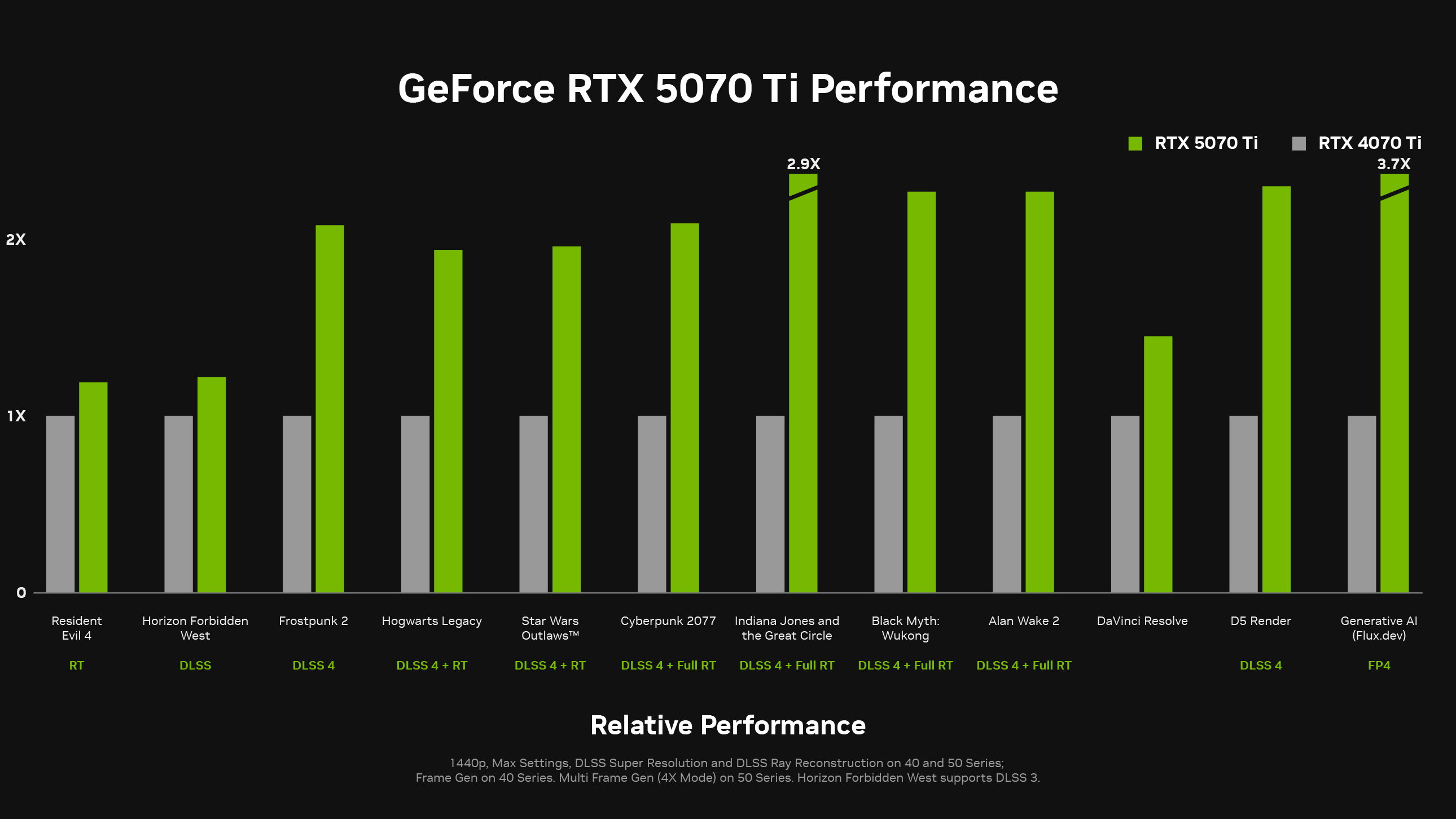
The Future of Graphics Cards
Looking ahead, several trends are likely to shape the future of GPUs:
- Continued Miniaturization: Transition to smaller process nodes will enable even more powerful and efficient GPUs.
- AI Integration: Deep learning will become more embedded in GPU architectures, with AI-driven rendering, physics simulation, and real-time analytics.
- Heterogeneous Computing: Increased integration of specialized cores for different workloads, including ray tracing, AI, and traditional rasterization.
- Sustainability and Energy Efficiency: As energy consumption becomes a critical concern, future GPUs will prioritize performance-per-watt metrics.
- Software and Ecosystem Development: Better developer tools, SDKs, and cloud integration will expand the applications of GPUs beyond gaming and entertainment.
Conclusion
The evolution of graphics cards from the RTX 30 series to the RTX 50 series showcases an extraordinary journey of technological innovation. Each generation has built upon the previous one, pushing the boundaries of real-time rendering, AI acceleration, and energy efficiency. NVIDIA’s commitment to architectural refinement, process technology, and feature integration has transformed GPUs from specialized accelerators into versatile engines powering the digital age.
As we stand on the cusp of the RTX 50 series, the future promises even more impressive capabilities, enabling new experiences in gaming, content creation, scientific research, and beyond. The rapid pace of development underscores the importance of continued innovation in hardware and software, ensuring that graphics processing remains at the forefront of technological progress.